In This Article
Double-leg lanyard prices depend on whether the product includes a shock absorber, whether the legs are made of static rope, webbing or elastic material, the type of hooks and karabiners, the length, and the documents supplied with the product. Order quantity and the choice of a kit also affect the price. A fair comparison is therefore made between products with the same technical specification, not on a single figure.
What does a double-leg lanyard do?
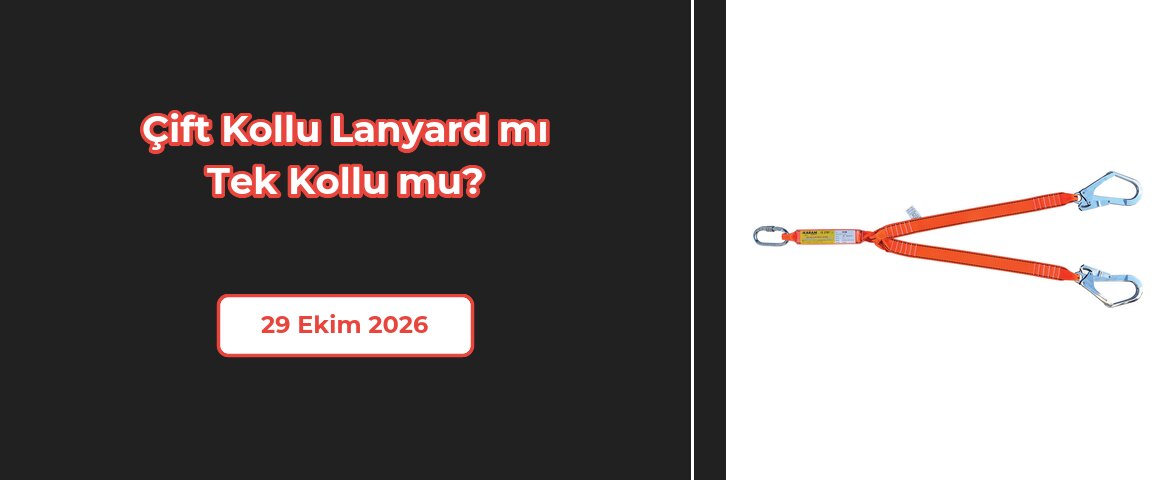
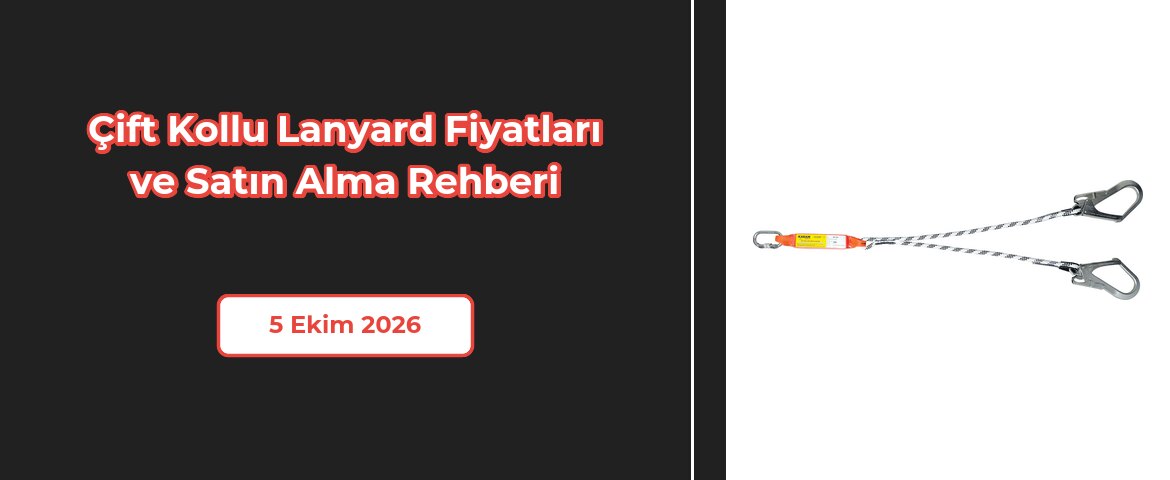
A double-leg lanyard (also called a twin-leg or Y-lanyard) is a fall arrest component that connects a full body harness to anchor points with two separate legs. With two legs, workers can keep one leg attached while moving from one connection point to the next. On shock-absorbing models, an energy absorber that deploys during a fall limits the impact force transmitted to the user.
According to Karam's KA341 user manual, the shock absorber starts to tear open when the force during a fall approaches 6 kN and limits the impact transmitted to the user at that level. The continuous connection a double-leg design offers is only achieved with the right technique: first attach the free leg to the new point, then release the old connection.
7 factors that determine double-leg lanyard prices
Two lanyards sold under the same name can be very different products technically. The seven factors below show where price differences come from and which differences genuinely matter for safety.
1. Is there a shock absorber?
This is the difference that affects price the most and is overlooked most often. Some double-leg lanyards include a shock absorber that complies with EN 355; others are simply connecting lanyards that comply with EN 354 and contain no shock absorber. In the Karam range, the KA341, KA361 and KA371 are shock-absorbing, while the Kİ231, Kİ261 and Kİ371 are double-leg lanyards without a shock absorber.
These two groups are not cheaper alternatives to each other. The Karam KA341 manual states that a lanyard without a shock absorber cannot be used on its own as fall arrest equipment. If a purchase list only says "double-leg lanyard", the wrong product may end up on site; the request should state "shock-absorbing" and EN 355 explicitly.
2. Leg material: static rope, webbing or elastic
The leg material determines the weight, the feel in use and the price. Static rope (12 mm polyester on the KA341) is robust against abrasion and has a round cross-section. Webbing (45 mm polyester on the KA361) is flat, lighter and easy to gather up. Elastic legs (KA371) shorten when slack, which reduces dangling and lowers the risk of the legs snagging.
| Leg type | Karam model | Weight (product page) | When to choose it |
|---|---|---|---|
| Static rope | KA341 | 1,725 g | Work where contact with hard, abrasive surfaces is likely |
| Webbing | KA361 | 1,525 g | Work where low weight and easy folding matter most |
| Elastic webbing | KA371 | 1,730 g | Work with frequent movement where a dangling leg could snag |
3. Hook and karabiner type
The hooks at the end of the lanyard are its most expensive metal parts, and they should be chosen according to the anchor element they will connect to. Karam's hook options include a steel large double-locking hook with a 55 mm opening (KK131, 25 kN), an aluminium hook with a 63 mm opening (KK136, 23 kN) and a version with 110 mm aluminium hooks (KA341 BA).
An aluminium hook is lighter; a steel hook is the option with the higher strength value stated in the manual. The gate opening must comfortably grip the pipe, beam or anchor element the hook will be attached to. The karabiner on the harness side must be a locking type; Karam's manuals say a self-locking karabiner should be preferred.
4. Lanyard length
Karam models come in different lengths; however, according to the KA341 manual, the maximum permitted lanyard length, including the shock absorber and connectors, is 2 metres. A longer lanyard gives more freedom of movement, but it also increases the free fall distance and the fall clearance required. Length should be chosen according to the working height as much as the price.
5. Documents and traceability
A quotation should also be compared on the documents the product comes with. For the Karam KA341, the site publishes the certificate issued under EN 355:2002 by the notified body GÉPTESZT Kft. (NB 2233), the EU declaration of conformity and the Turkish user manual. The product label should show the model, standard, serial and batch number, and date of manufacture. A product with missing documents or an incomplete label may become unusable on site, however low its price.
6. Single product or kit with a harness?
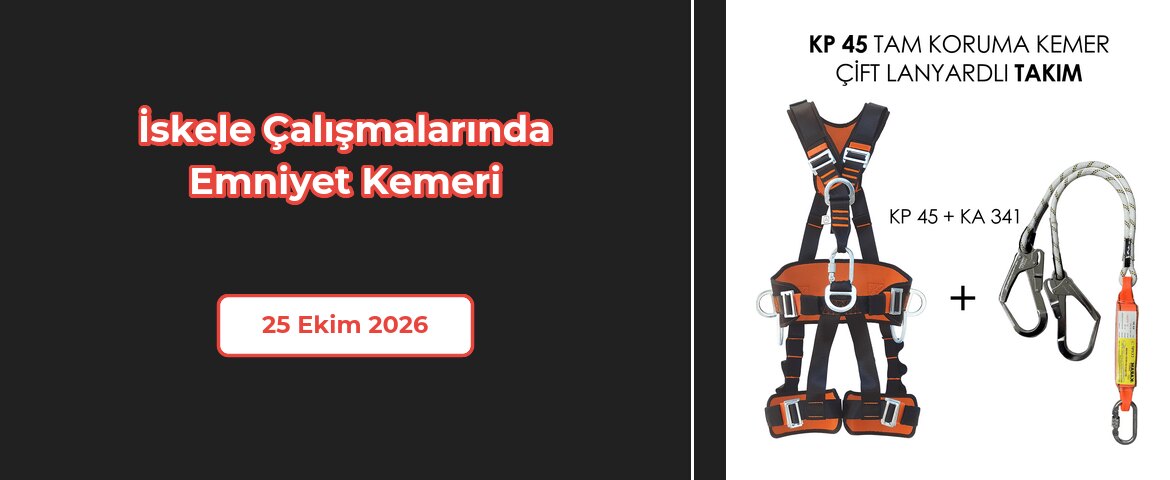
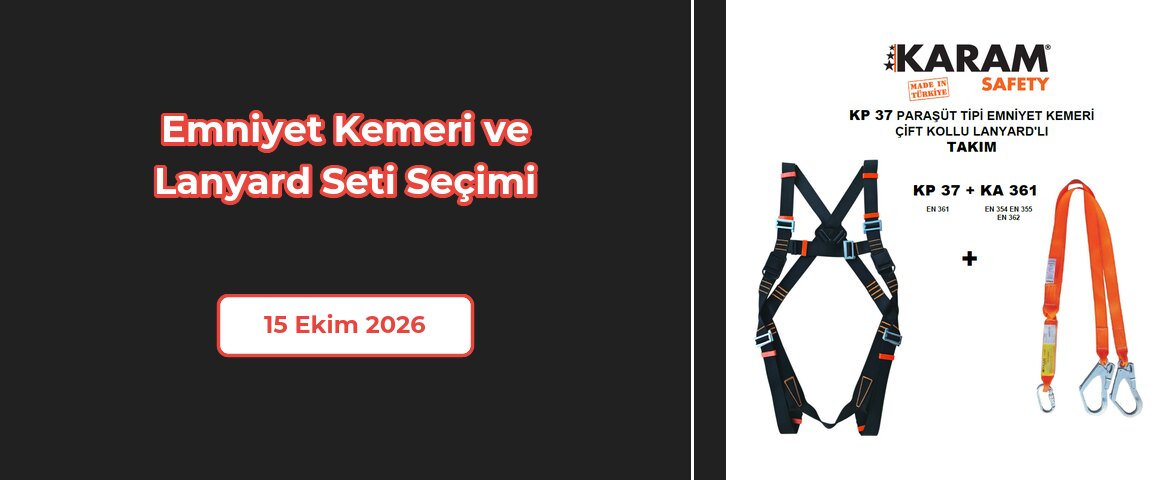
A lanyard can be bought on its own or supplied as a kit with a compatible harness. Karam offers KA341 and KA361 kits built with the KP10, KP30, KP37 and KP45 harnesses. A kit solves component compatibility with a single supplier and simplifies procurement; for crews that already have harnesses, buying only the lanyard may make more sense.
7. Order quantity and project needs
For bulk orders, the size distribution, hook preference and length combinations are clarified per project. If different crews need different hooks or lengths, the order can be split into several variants instead of insisting on a single model. This improves both the cost and the rate of correct use on site.
How do you work out the real cost of a "cheap" lanyard?
The cost of a lanyard is not only its purchase price; how many years and under what conditions it can be used on site also counts. According to Karam's manuals, a lanyard has a shelf life of 10 years and a recommended service life of no more than 5 years from first use. A shock absorber that has arrested a fall is not reused; it is destroyed.
Add to that the pre-use check before every use and a periodic inspection by a competent person at least every 12 months. A product whose label is illegible, whose usage history is unknown or which fails inspection must be withdrawn from use. So a product with complete documents, a legible label and an inspection record that can be kept will, over time, be used with less loss than an undocumented product that looks more affordable at first glance.
Checklist before you buy
Answering the questions below before requesting quotations ensures you compare products with the same specification:
- Is the product shock-absorbing, and does it have an EN 355 certificate?
- Is the leg material suitable for the work surfaces and the way the user moves?
- Does the gate opening of the hooks fit the anchor element they will connect to?
- Is the length compatible with the fall clearance at the working height?
- Is the karabiner on the harness side a locking type that complies with EN 362?
- Do the user manual in the local language, the declaration of conformity and the certificate match the product?
- Has compatibility with the existing harnesses been checked, or is a kit needed?
Karam double-leg lanyard options
| Model | Shock absorber | Legs | Hooks | Standards |
|---|---|---|---|---|
| KA341 | Yes | 12 mm static rope | Large double-locking hook | EN 354, EN 355, EN 362 |
| KA341 A | Yes | 12 mm static rope | 63 mm aluminium hook | EN 354, EN 355, EN 362 |
| KA341 BA | Yes | 12 mm static rope | 110 mm aluminium hook | EN 354, EN 355, EN 362 |
| KA361 | Yes | 45 mm webbing | Large double-locking hook | EN 354, EN 355, EN 362 |
| KA361 A | Yes | 45 mm webbing | 63 mm aluminium hook | EN 354, EN 355, EN 362 |
| KA371 | Yes | 45 mm elastic webbing | Large hook | EN 354, EN 355, EN 362 |
| Kİ231 / Kİ261 / Kİ371 | No | Static rope / webbing / elastic | Large hook | EN 354, EN 362 |
You can browse all shock-absorbing models on our shock-absorbing lanyard models page, and the group without shock absorbers on the double-leg rope lanyards page.
Related guides: single-leg vs double-leg lanyard comparison · harness and lanyard kits · how to read a certificate and declaration of conformity · choosing hooks that fit scaffold tubes
Frequently Asked Questions
Why does the price of a double-leg lanyard vary from seller to seller?
Because products sold under the same name can differ in shock absorber, leg material, hook type, length and the scope of their documents. Align these five specifications before comparing prices. Comparing the prices of two products whose specifications are not the same leads to the wrong product being chosen.
How can I find out the current price of a double-leg lanyard?
Because the price of a double-leg lanyard varies with the model, hooks, length and order quantity, current information is given by quotation. For current pricing, product options and the Karam lanyard models that suit your project, contact us on WhatsApp.
Can a double-leg lanyard without a shock absorber replace a shock-absorbing model?
Not directly for fall arrest. The Karam KA341 manual states that a lanyard without a shock absorber cannot be used on its own as fall arrest equipment. In which system and how a non-shock-absorbing product may be used must be checked in that product's own user manual and in the risk assessment.
Can a lanyard that has arrested a fall be used again?
No. According to Karam's manuals, a product that has arrested a fall or been exposed to a high shock load must be withdrawn from use and either sent back to the manufacturer or destroyed. A shock absorber that looks intact from the outside does not mean the product can be reused.
Get a quote for the right lanyard for your project
The way to compare double-leg lanyard prices correctly is to fix the technical specification first: shock absorber, leg material, hooks, length and documents. Once these five points are defined, the quotations you receive really describe the same product.
Tell us how many lanyards you need, in which length and with which hook type; our team will share the suitable Karam model and current pricing via WhatsApp.
Let our team recommend the best equipment for your needs and quote you quickly.