
In This Article
Choosing a construction safety harness starts with one question: does the task need fall arrest only, or work positioning as well? Once that is settled, assess an EN 361 full body harness for the attachment points the job requires, a size that genuinely fits the wearer and comfort that lasts a whole shift. The right harness is chosen together with the work on site, the lanyard and the anchor point.
What is a construction safety harness?
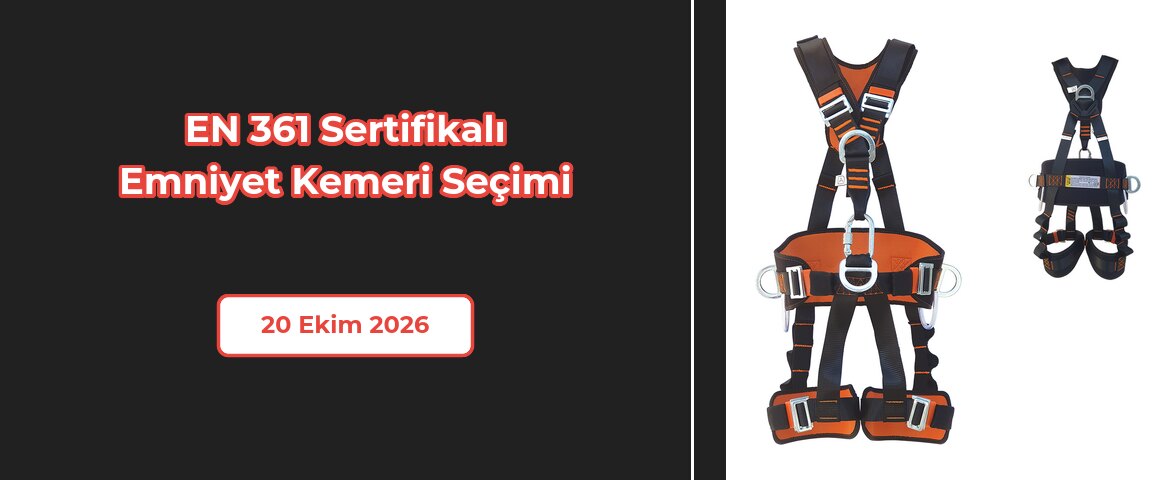
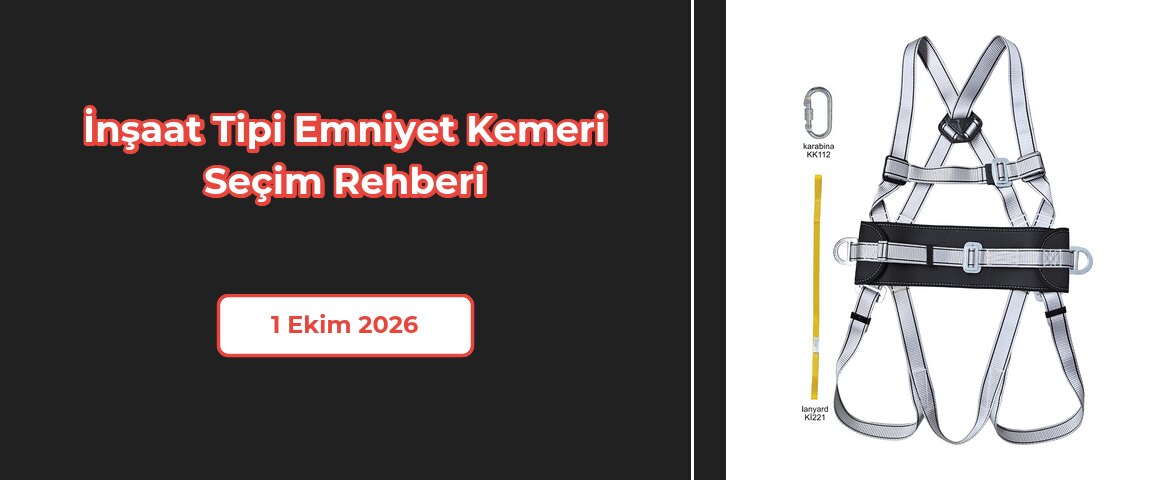
A construction safety harness is the everyday name for the full body harness that connects a person working at height on site to a fall arrest system. In technical literature it is called a "full body harness", and in some markets a "parachute-type harness". Its shoulder, chest, waist and leg straps distribute the load of a fall across the body.
There is an important boundary in this definition. A belt worn only around the waist for work positioning is not a fall arrest harness. As Karam's harness manuals state clearly, a work positioning belt must not be used for fall arrest. Wherever there is a risk of falling on a construction site, the element that carries the body must always be a full body harness. If you want to look at this distinction in more depth, read our article on the differences between a full body harness and a waist belt.
How do you choose a construction safety harness?
You can choose a construction safety harness in five steps: define the task, identify the attachment points you need, select the right combination of standards, measure the wearer and test the comfort on site. This order secures the safety function first and the fit to the user second.
- Define the task: Does the worker move around constantly, need both hands free at a single spot, or face a risk of remaining suspended for a long time?
- Identify the attachment points: Is the back (dorsal) ring enough, is a chest connection needed, will side rings be used for work positioning?
- Select the combination of standards: For fall arrest look for EN 361; if work positioning is also needed, look for EN 358 compliance together with EN 361.
- Measure the wearer: Compare waist, leg and height measurements with the manufacturer's size chart.
- Test the comfort: Put on and adjust the harness in a safe area, then try moving and crouching in it.
Choosing a harness by type of work
On a construction site the same harness does not suit every task. A formwork carpenter, a facade installer and a roofing crew have different connection needs. Splitting the work into three groups is a practical way to make the choice easier.
Work that needs fall arrest only
Where the worker moves while connected to an anchor point but never leans into the harness to work at one spot, fall arrest is enough. A simple, light full body harness with a back D-ring that complies with EN 361 does the job. Extra rings and a waist pad bring no advantage here; they add weight and snagging risk instead.
Work that also needs work positioning
A person who has to work on a column, pole or vertical surface with both hands free must be able to lean into the harness. That is work positioning, and it requires a harness with side D-rings and back support that also complies with EN 358. Work positioning does not replace fall arrest: the worker must at the same time be protected by a separate fall arrest connection.
Long-duration work and work with a risk of suspension
For work done at the same spot for long periods, or where the user could end up suspended, a seat support and additional attachment points improve comfort and control. The more comprehensive models that also comply with EN 813 (sit harnesses) are the ones to consider for this group.
| Task on site | Main need | Feature to look for | Karam model to consider |
|---|---|---|---|
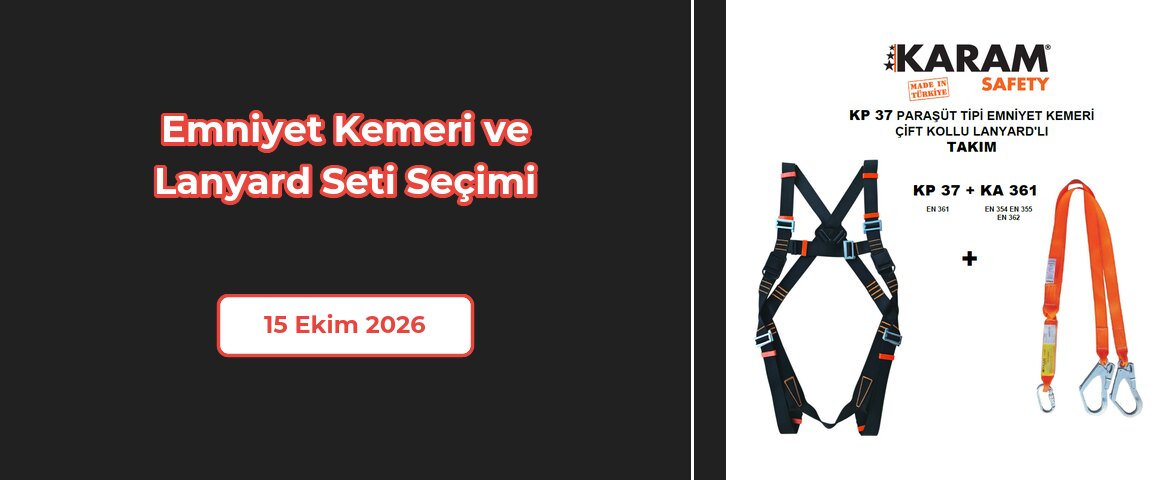
| Slab edge, platform, general assembly | Fall arrest | Back D-ring, EN 361 | KP37 |
| Column formwork, poles, positioning on a facade | Fall arrest + work positioning | Side D-rings, back support, EN 361 + EN 358 | KP10, KP30 |
| Tasks where a front connection is practical | Chest connection | Chest anchorage connection | KP30 Kulaklı |
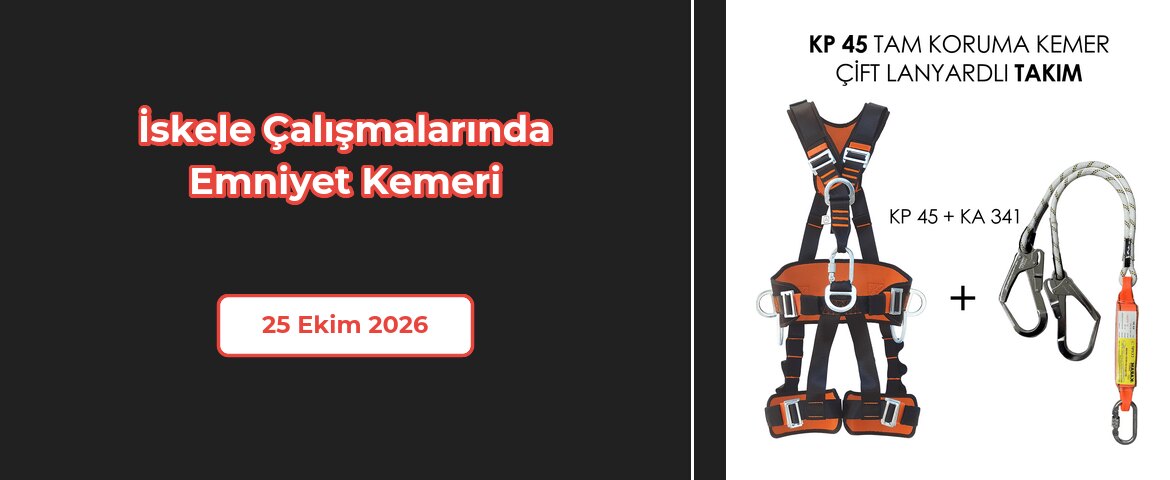
| Long-duration work with possible suspension | Extra connection + seat support | EN 361 + EN 358 + EN 813 | KP45, KP45 AO |
This table is a starting point. The final choice must be based on a site-specific risk assessment and the decision of a competent person.
Attachment points: which ring is for what?
Every ring on a full body harness has its own job, and connecting to the wrong ring is one of the most dangerous selection mistakes. A fall arrest system is attached only to the points marked with an "A" on the harness. Karam's harness manuals define these points as the back D-ring and, where the model has them, the chest rings marked "A/2"; the two "A/2" rings are always used together. Which fall arrest points a particular model has must be checked on that model's label and in its manual.
The side D-rings are for a work positioning lanyard only. According to the manuals, in work positioning the anchor must be at waist level or higher, the lanyard must be kept taut and free movement must be limited to a maximum of 0.6 metres. Connecting a shock-absorbing fall arrest lanyard to a side ring goes against the purpose the harness was designed for.
The back ring is the general-purpose connection: it restricts the user's movement the least and carries the body in a balanced way during a fall. A chest connection makes things easier in tasks where users need to see their connection and attach to a system in front of them. When choosing a harness, asking "which ring does my job need?" gives a better result than asking "how many rings does it have?".
Size, adjustment and comfort
The right size keeps the harness on the body during a fall and transfers the load to the right points. A loose harness can slip in a fall; a tight one restricts blood circulation and movement. That is why the size must be chosen by measurement, not by guesswork.
The size chart in the Karam KP10 user manual is based on waist, leg and height measurements:
| Size | Waist | Leg | Height |
|---|---|---|---|
| S / M | 65–95 cm | 45–65 cm | 155–175 cm |
| L / XL | 75–115 cm | 60–70 cm | 175–190 cm |
| XXL | 85–135 cm | 65–80 cm | 180–200 cm |
This chart is for the KP10; for other models, follow the manual of the product concerned. The manual also asks for a comfort and adjustment test in a safe place before first use, and for the buckles and strap tension to be checked regularly during use.
Comfort decides whether a harness is actually worn. A waist pad spreads the load over long shifts; tool loops make it easier to carry hand tools without taking them off the harness. A fall indicator shows visually whether the harness has arrested a fall and speeds up inspection. Automatic buckles save time on harnesses that are put on and taken off often.
Karam construction safety harness models
The information below comes from Karam product pages and the related manuals and certificates. All models are made from 45 mm polyester webbing with CNC machine stitching.
| Model | Standards | D-rings | Key feature |
|---|---|---|---|
| KP37 | EN 361 | One on the back (steel) | No back support, light, 2 tool loops |
| KP10 | EN 361, EN 358 | One on the back, two at the sides (steel) | Back support, fall arrest + work positioning |
| KP30 | EN 361, EN 358 | One on the back, two at the sides (steel) | 2 fall indicators |
| KP30 Kulaklı | EN 361, EN 358 | One on the back, two at the sides (steel) | Chest anchorage connection |
| KP45 | EN 361, EN 358, EN 813 | One on the back, two at the front, two at the sides (steel) | Seat support, indicator, supplied with a bag |
| KP45 AO | EN 361, EN 358, EN 813 | One on the back, two at the front, two at the sides (aluminium) | Automatic buckles |
Load rating, size range and current certification status must be checked on each model's own product page and manual; a feature of one model must not be assumed for another. You can find every option on our Karam safety harness models page.
A harness alone does not protect you
A safety harness is only one component of a fall arrest system. For the harness to protect the user, it needs a suitable lanyard or fall arrester, compatible connectors and an anchor point of sufficient strength. Karam's manuals require the anchor point to comply with EN 795, to have a strength of at least 12 kN and to be located preferably above the user, and at least at waist level.
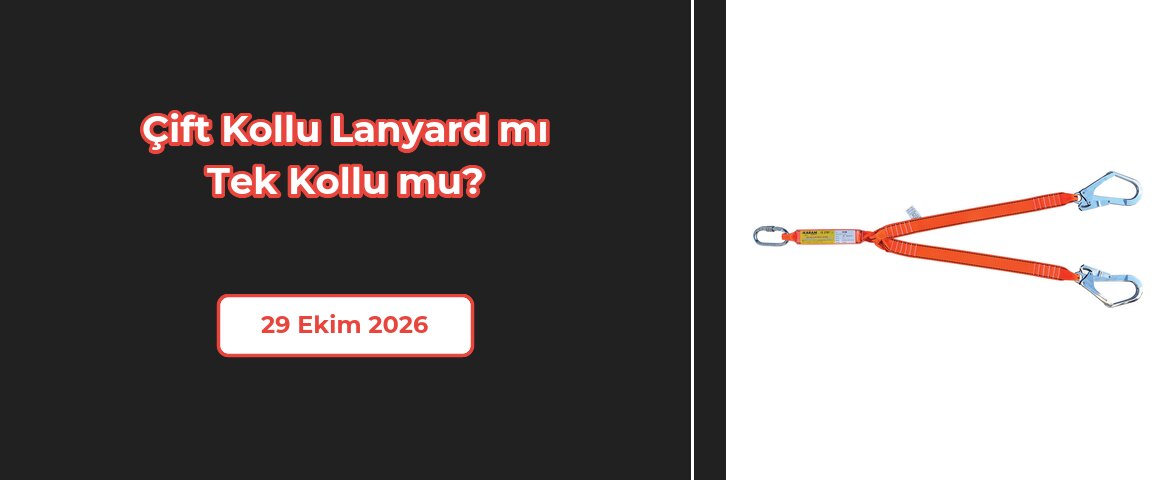
That is why the lanyard type should be considered at the same time as the harness. If a harness with work positioning features will only ever be used with a fall arrest lanyard, the extra rings may simply be unnecessary cost and weight. Conversely, a harness without side rings cannot be used for work positioning. We explain the system step by step in our article on how fall arrest systems work.
Common selection mistakes on construction sites
The most common mistake is making a single model the standard for the whole crew. A worker at the slab edge and a worker on column formwork have different needs; a shared model either falls short for one of them or adds needless load for the other.
The second mistake is choosing sizes on the assumption of a "standard size". A crew includes different body measurements, so more than one size has to be stocked. The third mistake is sharing harnesses within the crew. According to Karam's manuals, work-at-height equipment must be issued to one person and its usage history must be recorded.
Finally, choosing a harness only by looking at the standard number on its label is an incomplete assessment. The standard number shows which function the harness was designed for, but on its own it does not guarantee the rings the job needs, the right size or compatibility with the rest of the system.
Related guides: how to verify EN 361 compliance from the documents · compatible harness and lanyard kits · using a safety harness on scaffolding
Frequently Asked Questions
Is a construction safety harness the same as a parachute-type harness?
Largely, yes. Both terms are used in the market for a full body harness. Technically, what matters is not what the harness is called but whether it complies with EN 361 for fall arrest and whether it has the rings the job requires.
Is a harness with back support always better?
No. Back support and side rings bring a real advantage in work that requires work positioning. For work that needs fall arrest only, a lighter harness without back support may be enough. The right choice depends on what the job needs, not on the number of extra features.
When should a safety harness be withdrawn from use?
According to Karam's manuals, a harness is withdrawn from use if it has arrested a fall, a defect was found during inspection, its label is illegible, its usage history is unknown or it has reached the lifespan stated in the manual. The manuals give a shelf life of 10 years and a recommended service life of no more than 5 years from first use.
How often should a safety harness be inspected?
The user must check the harness visually and by hand before every use. In addition, Karam's manuals require a detailed periodic inspection at least every 12 months by the manufacturer or a competent person authorised by the manufacturer, with the result recorded.
Let's find the right harness for your site together
Choosing a construction safety harness is a process that starts with defining the task and ends with the attachment points, size and system compatibility. Listing the different work groups in your crew is the quickest way to make clear which model goes to which job.
For Karam harness models that suit the types of work on your project, the size distribution and a current quotation, message us on WhatsApp. Our technical team can prepare a harness and connection equipment proposal based on the work on your site.
Let our team recommend the best equipment for your needs and quote you quickly.