In This Article
When choosing an EN 361 certified safety harness, check that its EN 361 compliance is documented by a notified body's EU type-examination certificate, that the CE marking carries a notified body number next to it, and that the manufacturer's EU declaration of conformity and the user manual belong to the same model. "EN 361 certified" really describes all of these documents being present together.
What does the EN 361 standard cover?
EN 361 is the European standard for full body harnesses within personal protective equipment against falls from height. It defines the design, marking and test requirements for harnesses used for fall arrest that hold the body with shoulder, chest and leg straps. In Karam's documents the standard is cited in its EN 361:2002 edition.
EN 361 covers the harness only. The lanyard, shock absorber, karabiner and anchor the harness connects to are subject to separate standards, and how they work together as a fall arrest system is assessed under EN 363. Karam's harness manuals likewise state that when a full body harness is used for fall arrest, every component of the system must meet the requirements of EN 363.
How EN 361 relates to other standards
It is common to see more than one standard number on a harness. Each number shows that the harness has also been assessed for a different function:
| Standard | Equipment covered | What it means when you see it on a harness |
|---|---|---|
| EN 361 | Full body harnesses (fall arrest) | Can be connected to a fall arrest system at the points marked "A" |
| EN 358 | Belts and lanyards for work positioning and restraint | The side rings and waist belt are suitable for work positioning |
| EN 813 | Sit harnesses | Has a seat support and the related attachment point |
| EN 354 | Lanyards | Looked for on the lanyard, not the harness |
| EN 355 | Energy absorbers (shock absorbers) | Looked for on the lanyard, not the harness |
| EN 362 | Connectors (karabiners, hooks) | Looked for at the ends of the lanyard |
| EN 795 | Anchor devices | Looked for at the point the system is attached to |
For example, a harness that states only EN 361 is designed for fall arrest; even if it has back support, EN 358 compliance must be checked separately before using it for work positioning. We look at the difference between harness types in detail in our article full body harness or waist belt?
What does "EN 361 certified" mean?
In everyday use "EN 361 certified" is spoken of as if it were a single document, but there are four distinct concepts behind it: the standard itself, the type-examination certificate issued by a notified body, ongoing surveillance of production, and the manufacturer's declaration of conformity. The CE marking is the visible result of this process on the product.
The standard: a definition of requirements
EN 361 is not a document; it is a set of technical requirements. A harness being "EN 361 compliant" means it has been tested against these requirements and found to meet them. The existence of the standard does not by itself prove that a product complies; the proof is the documents described below.
EU type-examination certificate (Module B)
Equipment that protects against falls from height is classed under Category III, the highest risk group in the EU PPE Regulation (EU) 2016/425. In this category, the compliance of a specific model with the standard is examined by a notified body, which issues an EU type-examination certificate. The certificate applies to a specific model and carries a validity date.
In Karam's case, the certificate for the KP10 was issued by the notified body GÉPTESZT Kft. in Hungary (notified body no. 2233); it states the model, the standards applied (EN 361:2002 and EN 358:2018), and the issue and expiry dates.
Ongoing surveillance of production (Module C2 or D)
For Category III products, type examination alone is not enough; a notified body also checks regularly that series production matches the approved type. In Karam's documents this stage appears as the Module D quality assurance certificate issued by BSI (notified body no. 2797).
EU declaration of conformity
The EU declaration of conformity is the document in which the manufacturer declares, under its own responsibility, that the product complies with the relevant legislation. It shows the manufacturer's details, the product and model name, the standards applied, the regulation and the notified bodies involved in the process. Karam's manuals state that the declarations of conformity for its products are available on karamtr.com.
The CE marking and the number next to it
The CE marking shows that the conformity assessment required for placing the product on the market has been completed. On Category III products, the CE marking is accompanied by the four-digit number of the notified body that carries out production surveillance. On the Karam KA341 lanyard label, this number is 2797.
| Concept | Who issues it? | What does it prove? | Where is it found? |
|---|---|---|---|
| EN 361 | European standardisation system | Defines the requirements | The text of the standard |
| EU type-examination certificate | Notified body | That the model complies with the standard | From the manufacturer / product documents |
| Module C2 / D | Notified body | That series production matches the type | From the manufacturer |
| EU declaration of conformity | Manufacturer | The manufacturer's declaration of responsibility | With the product or on the manufacturer's website |
| CE + body no. | Manufacturer (marking) | That the process has been completed | Product label |
How do you check EN 361 documents?
EN 361 documents can be checked in six steps. The aim is to confirm that the harness in your hands really is the same product as the model in the documents.
- Match the model name: The model name on the certificate, declaration of conformity, manual and label must be exactly the same.
- Read the list of standards: If you will also use the harness for work positioning, the document must list EN 358 alongside EN 361.
- Check the validity date: Check the issue and expiry dates of the type-examination certificate.
- Verify the notified body: You can search for the body's name and number in the European Commission's database of notified bodies (NANDO).
- Check the label: The CE marking, notified body number, serial and batch number, and date of manufacture must be legible.
- Ask for the manual: The user manual must be in the language of the country where the product will be used.
What should the product label show?
The label is the only place where a user on site can identify the product without looking at the documents. The label diagram in the Karam KP10 manual includes the following information: manufacturer, product name, year of manufacture, serial number, notified body number, a "read the manual before use" warning, the standard, model number, material, batch number and size.
A harness with an illegible label must not be used, even if its documents are complete. According to Karam's manuals, a product whose markings are illegible or missing is withdrawn from use, because it is then impossible to verify which model and batch it belongs to, and therefore which document it corresponds to.
Common misconceptions about EN 361
"An EN 361 harness protects you on its own." EN 361 covers the harness only. Protection comes from the system built with a suitable lanyard or fall arrester, connectors and a sufficient anchor.
"If it has back support, it can be used for work positioning too." Work positioning requires separate EN 358 compliance. A waist pad on its own does not show this compliance.
"A certificate is obtained once and is valid indefinitely." Type-examination certificates carry a validity date. When buying new equipment, you need to check that the document is valid.
"A photocopy of the certificate is enough." You must verify that the certificate belongs to the model in your hands by matching it against the declaration of conformity and the label. A document for another model is not valid for a harness that merely looks similar.
Karam EN 361 safety harnesses and their documents
The documents of the following Karam full body harnesses list EN 361; some models list additional standards as well. The standard information is taken from each model's certificate and user manual.
| Model | Standards listed in the documents |
|---|---|
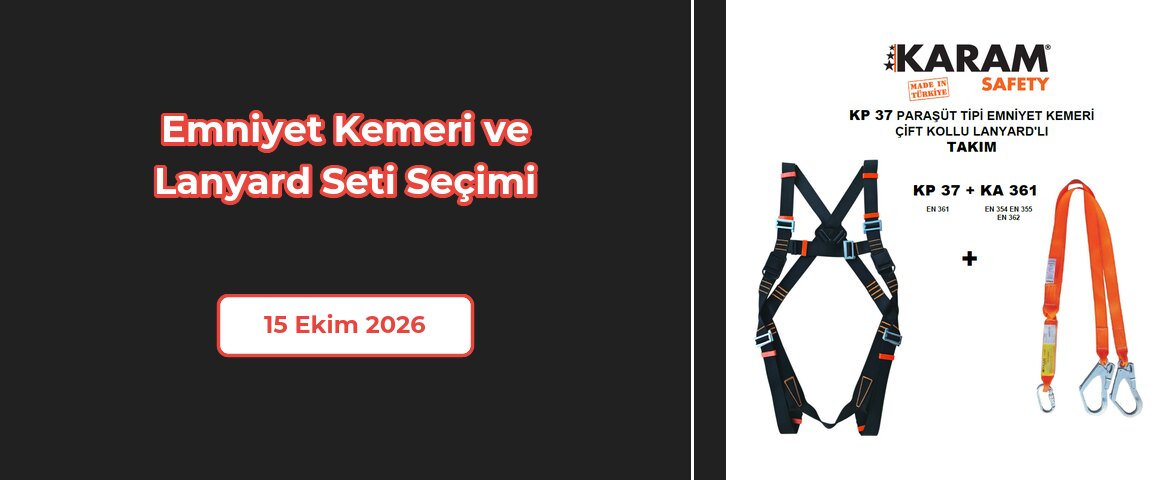
| KP37 | EN 361:2002 |
| KP10 | EN 361:2002, EN 358:2018 |
| KP30 | EN 361:2002, EN 358:2018 |
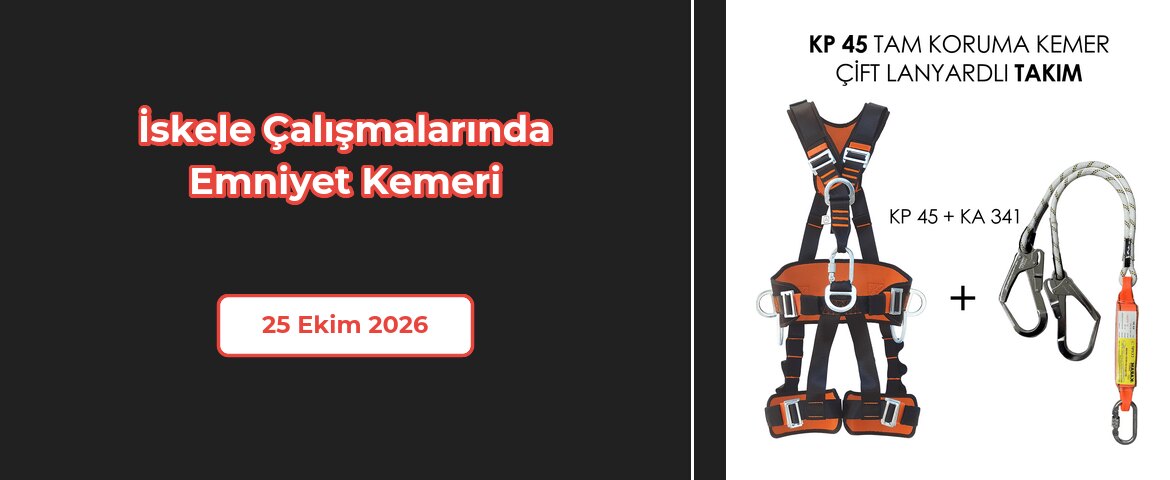
| KP45 | EN 361:2002, EN 358:2018, EN 813:2008 |
You can view the certificates for each model on our Karam certificates page and compare all models in the full body safety harnesses category.
Related guides: choosing a harness by task and size · EN 363 compatible harness and lanyard kits · checking lanyard documents when buying
Frequently Asked Questions
What is the difference between EN 361 and EN 358?
EN 361 covers full body harnesses for fall arrest, while EN 358 covers belts and lanyards for work positioning and restraint. A work positioning belt is not used for fall arrest. If both functions are needed, the harness must be certified to both standards.
Does every safety harness with a CE marking comply with EN 361?
No. The CE marking shows that the product has passed the conformity assessment required for its own intended use. For example, a product certified only as a work positioning belt can also carry the CE marking. For fall arrest, check that EN 361 is clearly stated in the documents and on the label.
If the certificate expires, can I no longer use my harness?
The validity of the certificate relates to the manufacturer's ability to place that model on the market. Whether a harness in service is fit for use is determined by the lifespan in the manual, the result of periodic inspection and its usage history. For new purchases, however, you should ask for a product with a valid certificate.
Where can I find the documents for Karam products?
The certificates for each model are published on the certificates page at karamtr.com. Karam's manuals also state that the EU declarations of conformity for the products are available on the website. You can send a request for documents for a specific batch or model through our contact channels.
A harness with complete documents, ready for site
Choosing an EN 361 certified safety harness is not complete when you see a standard number; it is complete when you have verified that the certificate, declaration of conformity, label and manual all describe the same model. This check saves you time both in audits and in safe use on site.
To receive the current certificate and declaration of conformity for the Karam model you need, along with product options and a quotation, message us on WhatsApp.
Let our team recommend the best equipment for your needs and quote you quickly.