
In This Article
In the double-leg vs single-leg lanyard choice, a single-leg shock-absorbing lanyard is usually enough if the worker does the job without leaving one anchor point. For work that progresses from one point to another, a double-leg shock-absorbing lanyard makes it possible to keep at least one leg connected while moving. Neither is safer in every situation; the right choice depends on how the work moves, the anchor layout and the fall clearance.
What is the difference between a single-leg and a double-leg lanyard?
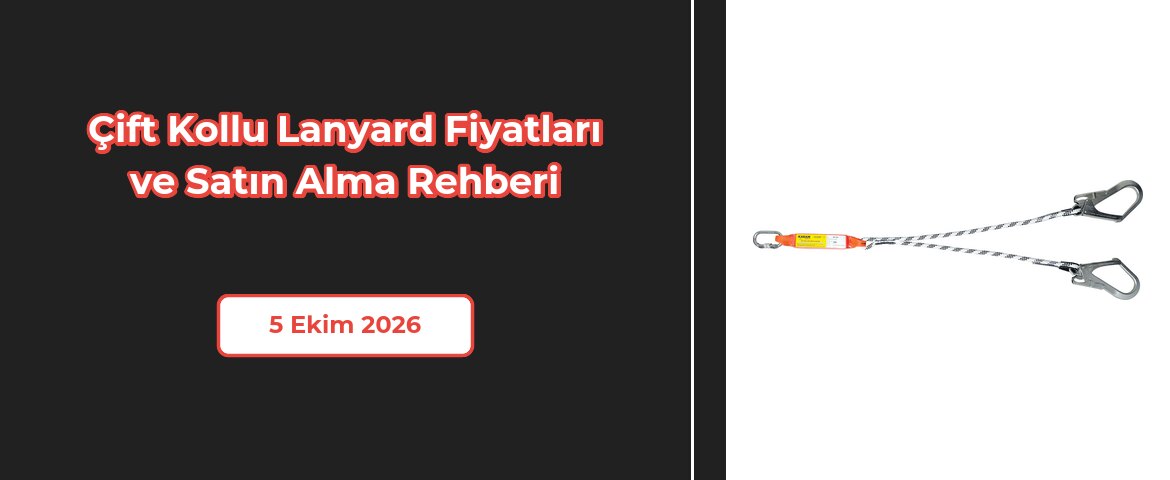
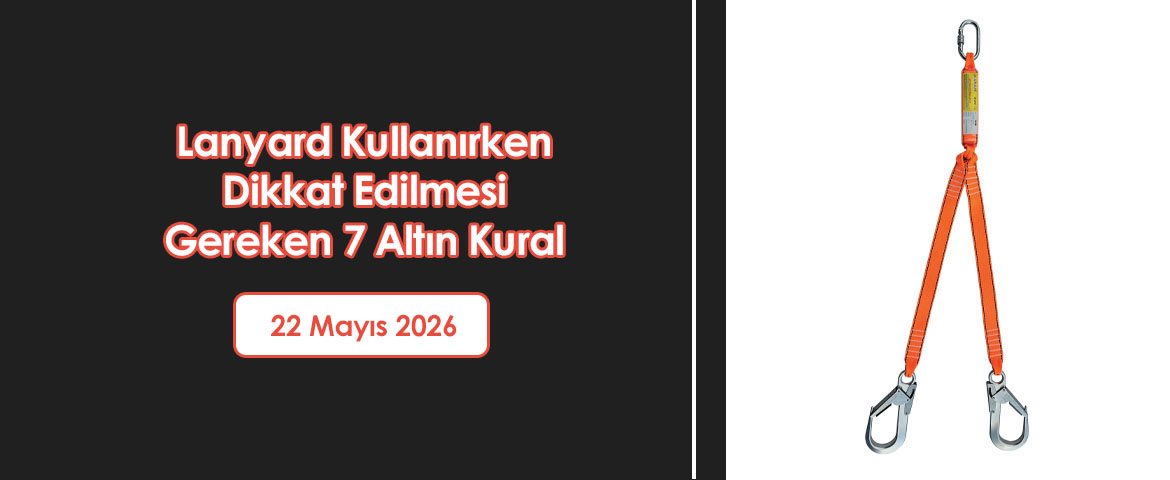
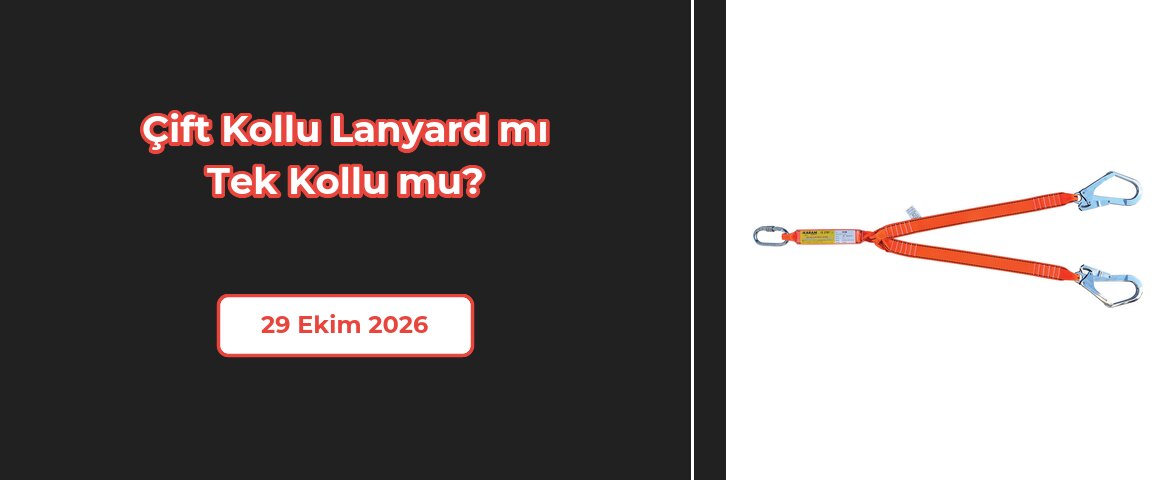
A single-leg lanyard connects the harness to a single anchor point with one leg. A double-leg lanyard has two legs coming from a common shock absorber, in a Y or V shape, and can be connected to two separate points. The basic difference is whether the worker can stay connected while changing connection points: with a single-leg lanyard the connection is briefly broken during a transfer, with a double-leg lanyard it need not be.
This difference comes with a condition. The continuous connection a double-leg lanyard provides only happens with the right technique: the free leg is attached to the new point first, checked to be locked, and only then is the old connection released. If both legs are released at the same time, a double-leg lanyard offers no advantage over a single-leg one.
Single-leg vs double-leg lanyard comparison
| Criterion | Single-leg shock-absorbing lanyard | Double-leg shock-absorbing lanyard |
|---|---|---|
| Connection points | One | Two (with a common shock absorber) |
| Connection during transfer | Briefly broken | Not broken with the right technique |
| Suitable type of work | Work where the anchor point does not change | Work progressing left-right, up-down |
| Weight and bulk | Lighter and simpler | Heavier because of the second leg and hook |
| Snagging risk | Low | The free leg can snag; an elastic leg reduces this risk |
| Discipline in use | Simple | Requires transfer technique and managing the free leg |
| Standards (Karam shock-absorbing models) | EN 354, EN 355 | EN 354, EN 355, EN 362 |
| Karam examples | KA381 (static rope), KA321 (webbing), KA391 (elastic) | KA341 (static rope), KA361 (webbing), KA371 (elastic) |
Some single-leg Karam models are supplied without connectors at their ends, others with karabiner and hook combinations; weight should therefore be compared between models with the same fittings. As an example, the weight of the KA341 double-leg lanyard is given on its product page as 1,725 grams.
When is a single-leg lanyard enough?
A single-leg lanyard is enough when the worker stays connected to the same anchor point throughout the job. On a machine maintenance platform, in an assembly job done while connected to a fixed anchor eye, or in similar work where the anchor point does not change for the duration of the task, a second leg is not used; it only adds weight and snagging risk.
The simplicity of a single-leg lanyard can also be a safety advantage. Fewer components make the pre-use check easier and remove mistakes such as a free leg snagging on something or being parked in the wrong place. Karam's single-leg models include the shock-absorbing KA381 with static rope and the KA321 with webbing.
When is a double-leg lanyard needed?
A double-leg lanyard is needed when the worker has to move from one anchor point to another during the job. The recommendation in Karam's KA341 manual points the same way: if the work is not at one fixed point but continues with horizontal and vertical movement, a shock-absorbing double-leg lanyard should be preferred. Scaffold erection, steel construction, tower and pole climbing, and progressing along lines with intermediate anchors all fall within this description.
For example, when moving along a horizontal line with intermediate anchor points, the connection has to be changed at each intermediate point. We cover these applications separately in our article on using a double-leg lanyard on horizontal lifelines. The KA341 shock-absorbing double-leg lanyard is one of the Karam models designed for this kind of work involving transfers.
Is a double-leg lanyard always safer?
No. Used correctly in work involving transfers, a double-leg lanyard provides continuity of connection; used incorrectly, it also creates more room for mistakes than a single-leg lanyard. Safety comes not from the number of legs but from a choice that suits the job and from the right technique.
Typical mistakes with double-leg lanyards are releasing both legs at the same time during a transfer, clipping the free end of the unused leg to the harness attachment ring, and letting a dangling leg catch on an obstacle. The Karam KA341 manual clearly states that the free end of a Y- or V-type lanyard must not be clipped to the harness's attachment element or ring. Using a double-leg lanyard for work at a fixed point only creates unnecessary weight and complication.
Can two single-leg lanyards replace a double-leg lanyard?
No. The Karam KA341 manual states that two separate shock-absorbing lanyards must not be used side by side (in parallel), and that a single Y- or V-type double-leg lanyard with one shock absorber must be used instead. When two separate shock absorbers take load at the same time, the way the system limits the impact force may not work as designed.
This is a common improvisation on site: two single-leg lanyards that happen to be available are clipped to the harness separately and used as if they were a double-leg lanyard. It may look economical, but it goes against the manufacturer's instructions. If a job involving transfers needs a double-leg lanyard, a double-leg model with a single shock absorber must be obtained.
Other rules to keep in mind when choosing a lanyard
Whether single-leg or double-leg, some rules in Karam's manuals apply to every lanyard. The maximum lanyard length, including connectors, is 2 metres; a lanyard must not be extended by joining it to another lanyard. No knots should be tied in the rope, the end loops must not be used in a choke hitch, and the lanyard length must not be adjusted where there is a risk of falling.
The shock absorber is also part of the decision. Karam also makes double-leg lanyards without shock absorbers (Kİ231, Kİ261, Kİ371); as the manual warns, these products are not sufficient for fall arrest on their own. Before the "double-leg or single-leg" decision, the answer to "shock-absorbing or not?" must be clear.
Finally, this comparison is about fall arrest lanyards. Work positioning lanyards, used for leaning into the harness to work on a column or pole, are a separate product group and attach to the side rings of the harness.
Four questions to help you decide
- Will the anchor point change during the job? If not, consider a single-leg lanyard; if it will, consider a double-leg lanyard.
- How often will you transfer? With frequent transfers, a double-leg lanyard with elastic legs makes it easier to manage the free leg.
- Is there enough fall clearance? With both types, there must be enough distance below the anchor for the shock absorber to deploy; the value is calculated from the product manual.
- What surfaces will the legs touch? Static rope can be preferred on hard, abrasive surfaces, and webbing where low weight matters.
Related guides: double-leg lanyard buying guide · moving on scaffolding with a double-leg lanyard · harness kits with double-leg lanyards
Frequently Asked Questions
Is a single-leg lanyard more economical than a double-leg one?
A single-leg lanyard is generally a simpler product because it has fewer components; however, the right comparison is based on suitability for the job. Using a single-leg lanyard for work involving transfers leads to breaks in the connection. For current pricing and the model that suits your project, contact us on WhatsApp.
Should a single-leg or a double-leg lanyard be used for work positioning?
Neither. Work positioning is done with a separate work positioning lanyard that complies with EN 358, using the side rings of the harness; a fall arrest lanyard is not used for this purpose. Karam's belt fixing and work positioning products are in the lanyards category.
Can I work with the two legs of a double-leg lanyard attached to different points?
During the transfer technique, the two legs may briefly be attached to different points while you connect to the new one; this is part of the technique. How the free leg is carried and where it is parked during the job must follow the figures in the product manual. The free end of the unused leg must not be clipped to the harness attachment ring.
Can I extend the length of my lanyard?
No. According to Karam's manuals, the maximum lanyard length, including the shock absorber and connectors, is 2 metres. Extending a lanyard with another lanyard, tying knots in it or adjusting its length where there is a risk of falling goes against the manufacturer's instructions and increases the fall distance.
Let's pin down the right lanyard type for your work
The answer to the double-leg or single-leg lanyard question depends on whether the anchor point changes during the job. At a fixed point the simplicity of a single-leg lanyard stands out; in work involving transfers, the continuous connection of a double-leg lanyard does.
Tell us how your crew works and which points you will connect to; we will recommend a suitable Karam single-leg or double-leg model, with the right hook option, via WhatsApp. You can also browse every option on our shock-absorbing lanyards page.
Let our team recommend the best equipment for your needs and quote you quickly.