
In This Article
When choosing a safety harness and lanyard kit, first check that the harness suits the task, then that the lanyard is shock-absorbing and suits the way the user moves. The two parts join through the harness's fall arrest ring marked "A" and the lanyard's locking karabiner. The right kit is one in which the harness, lanyard and connectors work without compromising each other's safety function.
What is a safety harness and lanyard kit?
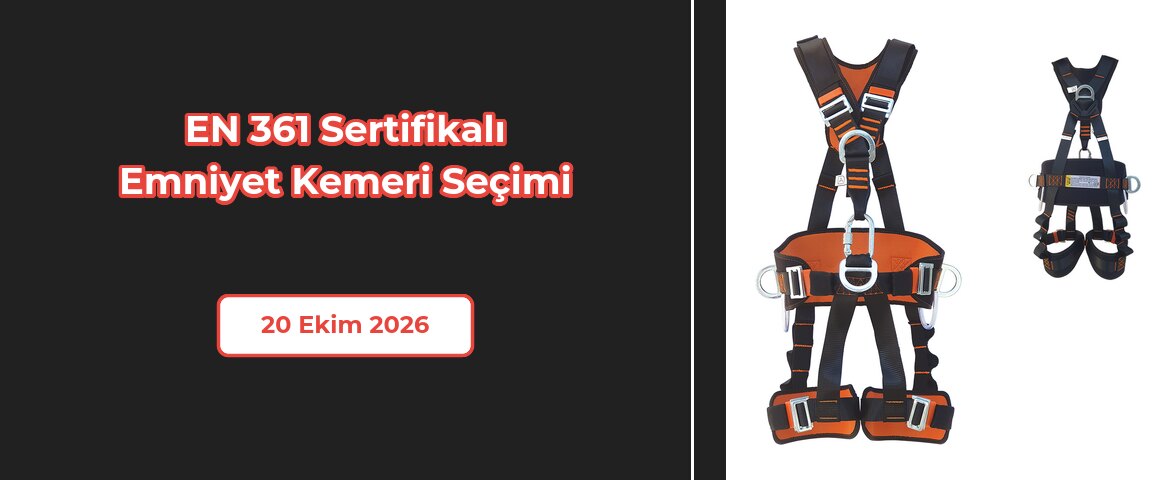
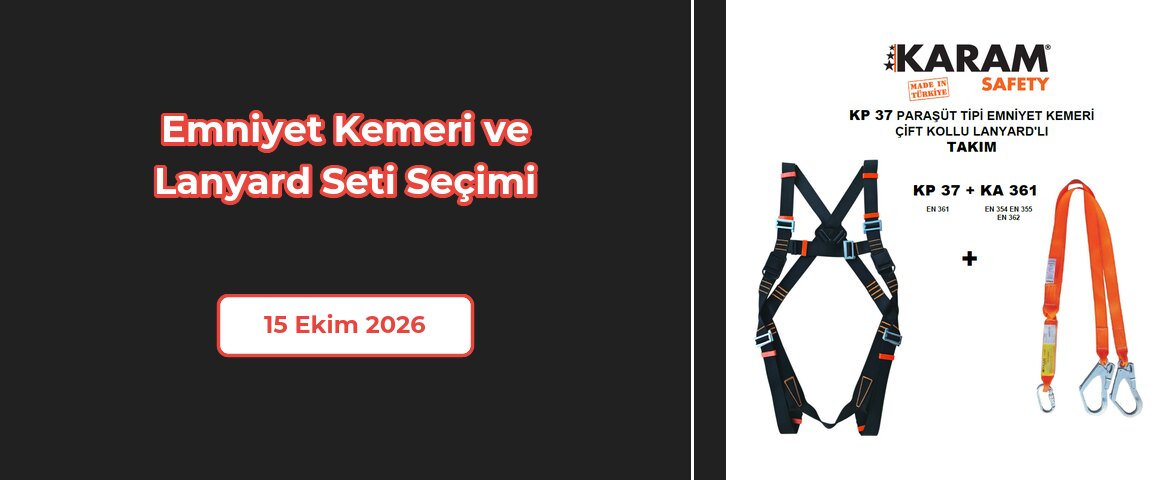
A safety harness and lanyard kit is a set made up of a full body harness (EN 361) and a shock-absorbing lanyard (EN 354 and EN 355) matched to be used together. The karabiner and hooks at the ends of the lanyard comply with EN 362. The kit completes the user side of the fall arrest system; the anchor point is not included in the kit.
This last point matters. The kit is the equipment that connects the worker to the anchor; the anchor itself is the structure on site, a lifeline or a separately selected anchor device. Karam's manuals require the anchor point to comply with EN 795 and to have a strength of at least 12 kN.
What parts make up a fall arrest system?
According to Karam's harness manuals, when a full body harness is used for fall arrest, every component of the system must meet the requirements of EN 363 (fall arrest systems). Each component has its own standard and its own job:
| Component | Job | Related standard |
|---|---|---|
| Full body harness | Holds the body in a fall and distributes the load across the torso | EN 361 |
| Lanyard / leg | Connects the harness to the anchor | EN 354 |
| Shock absorber | Limits the impact force transmitted to the user in a fall | EN 355 |
| Karabiners and hooks | Connect the components to each other and to the anchor | EN 362 |
| Anchor point / device | The fixed point the system is attached to | EN 795 |
| Complete system | Fall arrest function of the components working together | EN 363 |
This table shows why a "kit" is more than two products put into one package. Every part of the kit must comply with its own standard and work correctly with the others. We explain how the system works in detail in our article on how fall arrest systems work.
How do you match a safety harness with a lanyard?
A safety harness and a lanyard are matched at three connection points: the harness side, the anchor side and the unused leg. The check at each one is different, and only when all three are right does the kit form a safe whole.
Harness side: where does the lanyard attach on a harness?
A shock-absorbing lanyard is attached only to the fall arrest point on the harness marked with an "A". The Karam KA341 manual shows this as the chest (sternal) attachment element or the back (dorsal) D-ring of an EN 361 harness. The side D-rings of the harness are for work positioning; a fall arrest lanyard is never attached to them.
The connection is made with the karabiner at the harness end of the lanyard. The karabiner must be locked; Karam's manuals recommend self-locking karabiners. Also check that the karabiner sits freely in the harness ring so that it is not cross-loaded.
Anchor side: matching hooks to the anchor
The hooks at the anchor ends of the lanyard must comfortably grip the element they connect to. A gate opening that is too small for the anchor element can prevent the hook from closing fully; one that is too large only adds weight. Once locked onto the anchor, the hook must not be exposed to a sharp edge or side loading.
Where does the unused leg go?
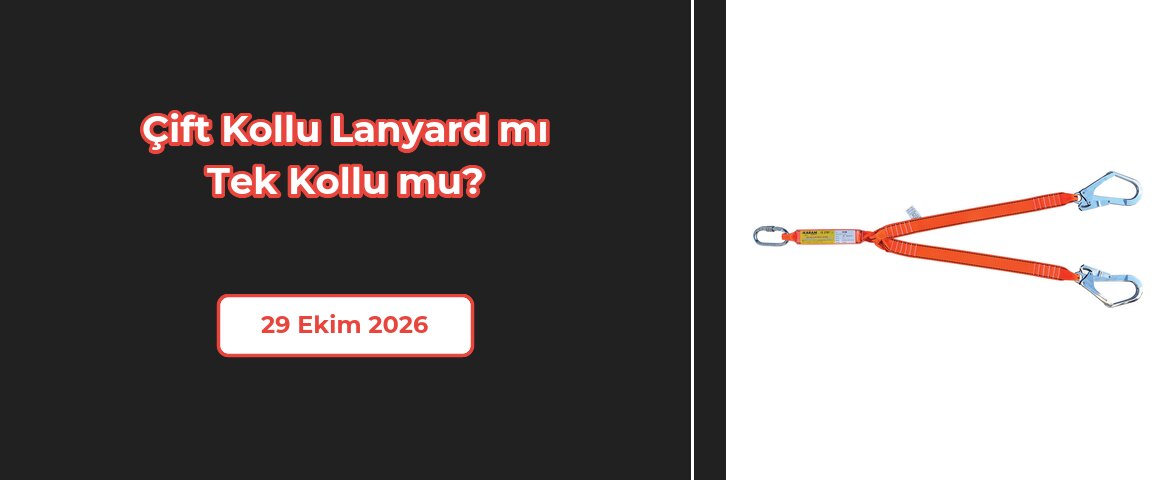
When a double-leg lanyard is in use, one leg may be attached while the other hangs free. According to the Karam KA341 manual, the free end of a Y- or V-type lanyard must not be clipped to the attachment element or a ring of the full body harness. Where and how the free leg is parked must follow the figures in the product's manual.
The same manual contains another important warning: two separate shock-absorbing lanyards must not be used side by side (in parallel). A single Y- or V-type double-leg lanyard with one shock absorber must be used instead. Adding a second single-leg lanyard next to a single-leg lanyard therefore does not replace a double-leg kit.
Karam harness and lanyard kits: which kit suits whom?
Karam kits are made by pairing four harnesses with two shock-absorbing double-leg lanyards. The harness is chosen by whether the job requires work positioning; the lanyard is chosen by whether the legs should be static rope or webbing.
| Harness ↓ / Lanyard → | KA341 (12 mm static rope) | KA361 (45 mm webbing) |
|---|---|---|
| KP10 — back support, EN 361 + EN 358 | KP10 + KA341 kit | KP10 + KA361 kit |
| KP30 — back support, 2 indicators, EN 361 + EN 358 | KP30 + KA341 kit | KP30 + KA361 kit |
| KP37 — no back support, back D-ring, EN 361 | KP37 + KA341 kit | KP37 + KA361 kit |
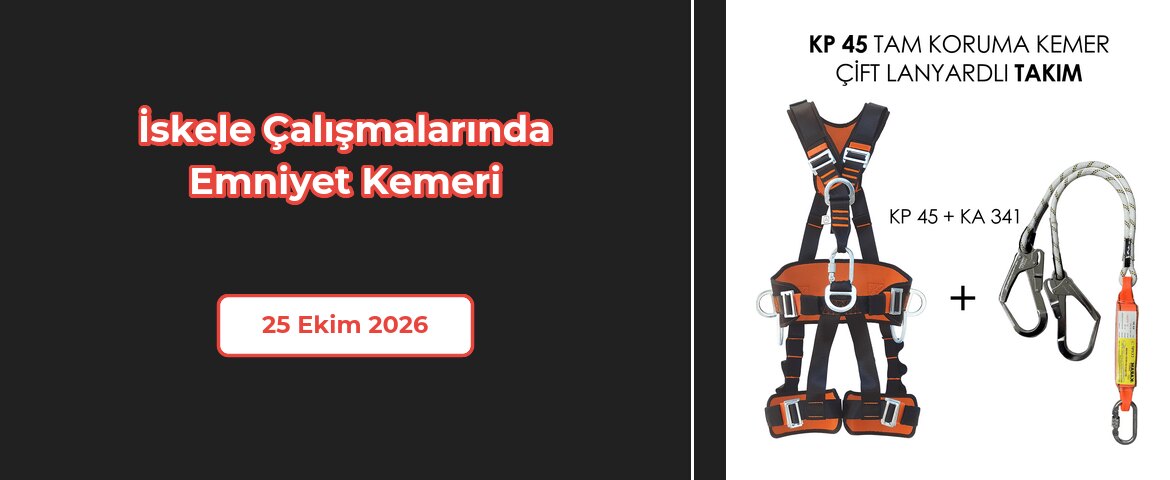
| KP45 — full protection, EN 361 + EN 358 + EN 813 | KP45 + KA341 kit | — |
The lanyards in the kits come with a karabiner and large double-locking hooks; the lanyard length stated on the kit pages is 1.20 metres. The technical specifications of the harness and lanyard are listed separately on each kit's own product page.
Choosing the harness: will work positioning be needed?
If the crew will work with a fall arrest connection only, the KP37 without back support is a light, simple starting point. If people will work on a column, pole or facade leaning into the harness with both hands free, the KP10 or KP30 with side rings and back support is needed. For long-duration work with a possibility of suspension, the KP45, which also has a seat support, can be considered.
Choosing the lanyard: rope or webbing?
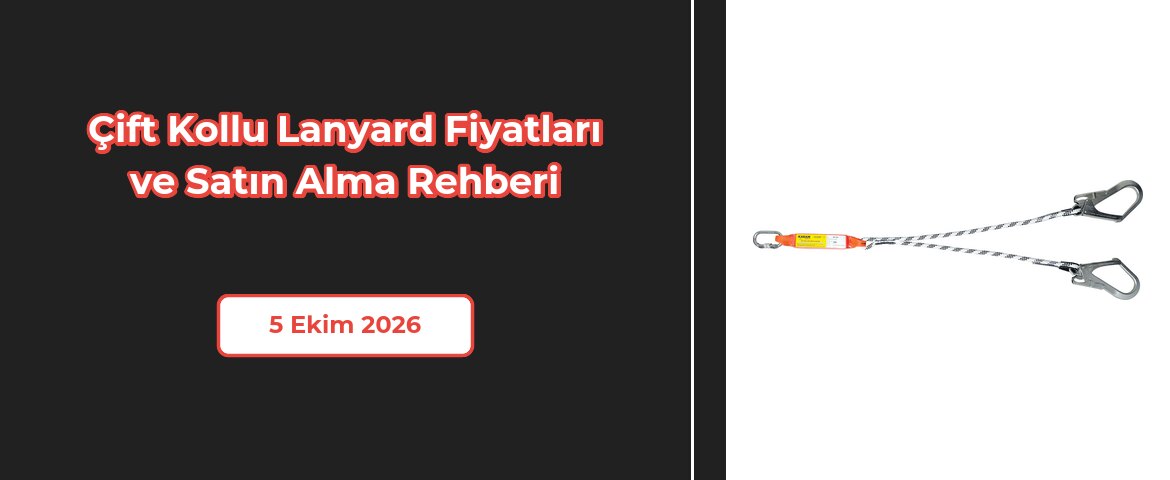
The 12 mm static rope legs of the KA341 have a round cross-section and resist abrasion; they stand out in work where contact with hard surfaces such as concrete and steel is likely. The 45 mm webbing legs of the KA361 are flatter and lighter, and easy to gather up. Both lanyards are shock-absorbing and comply with EN 354, EN 355 and EN 362.
Buy a kit or buy the parts separately?
The main advantage of a kit is that the harness and lanyard have been matched together under one manufacturer's manuals. The instructions refer to each other, and labelling and document tracking run from a single source. For companies equipping a crew for the first time, this simplifies procurement and inspection.
Buying the parts separately makes more sense for other needs. If the crew already has harnesses in good condition and only the lanyards are being renewed, or if the job calls for a different hook type, elastic legs or a different length, individual products give a more flexible choice. In that case each part's manual must be read separately with regard to compatibility with the other part. Karam's manuals stress that when several items of equipment are used together, the safety function of one must not endanger that of another.
Common mistakes when choosing a kit
The most common mistake is assuming the kit also covers the anchor. A kit connects the user; the suitability of the point it connects to must be assessed separately. Another mistake is pairing a double-leg lanyard without a shock absorber with a harness and using it as if it were a fall arrest kit. According to the manual, a lanyard without an energy absorber does not count as protective equipment on its own in a fall arrest system; the lanyard in a kit must always be shock-absorbing.
The harness size within a kit is also often forgotten. When ordering kits, the harness size must be specified individually for each person in the crew. Finally, kit components must not be inspected as if they were a single item: the harness and lanyard are each checked separately before every use, and the system is not used until any defective component has been replaced.
Related guides: choosing a harness by type of work · buying criteria for double-leg lanyards · the difference between single-leg and double-leg lanyards · checking EN 361 documents
Frequently Asked Questions
Can I choose the harness size in a kit?
Yes. Karam kit pages list harness size options from S to XXXL. When ordering, you need to specify a size for each user based on waist, leg and height measurements. The right size is essential for the harness to stay on the body in a fall and to distribute the load correctly.
Can I use the lanyard from a kit with a different harness?
The lanyard can be used with a harness that complies with EN 361 and has a fall arrest point marked "A". However, the user manuals of both products must be read, and you must check that the karabiner sits correctly in the harness ring and that the components do not hinder each other's function. If you cannot be sure of compatibility, consult the manufacturer.
Does a safety harness kit include an anchor?
No. Karam kits consist of a harness and a shock-absorbing double-leg lanyard. The anchor point depends on the structure on site or on separately selected equipment, and it must comply with EN 795 and have a strength of at least 12 kN. For suitable options, see our Karam anchor equipment page.
How is a kit periodically inspected?
The harness and the lanyard are inspected as separate products. Before every use, the user checks the straps, stitching, metal parts, karabiner lock and labels. According to Karam's manuals, both products must also undergo a detailed examination at least every 12 months by the manufacturer or a competent person it has authorised, and the result must be recorded.
Let's choose the right kit for your crew together
The right safety harness and lanyard kit is chosen by assessing three things together: whether the job requires work positioning, whether the legs suit the surfaces on site, and whether the hooks fit on the anchor side. Your answers to these three questions point to the right cell in the matrix above.
Send us your crew's types of work, headcount and size distribution on WhatsApp, and we will work out the Karam kit combination that suits you, together with a current quotation.
Let our team recommend the best equipment for your needs and quote you quickly.